Resource Library

Go deeper.

Case studies from every module with sources. Books and reports that sharpen your thinking. Podcasts and channels worth following. Curated for professionals building real AI judgment.

Reading List

Books and reports for learners who want to go beyond the course. Each one earns its place.

Books
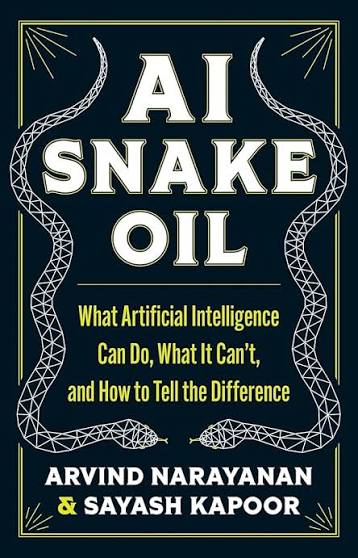
AI Snake Oil cover
Book · 2024
AI Snake Oil
Arvind Narayanan & Sayash Kapoor
The clearest explanation of what AI can and can't do — and why most AI claims are overblown. Essential for anyone navigating AI hype at work.
→ aisnakeoil.com
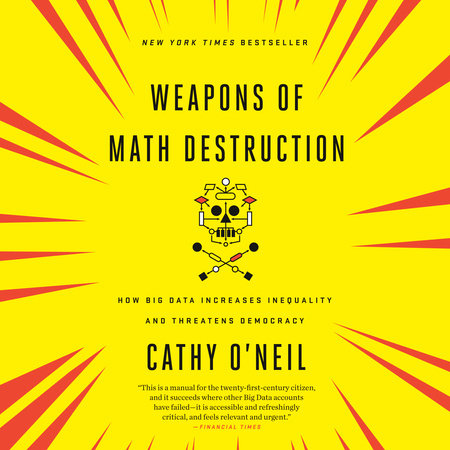
Weapons of Math Destruction cover
Book · 2016
Weapons of Math Destruction
Cathy O'Neil
How algorithms harm the poor, reinforce discrimination, and threaten democracy. The classic case for why AI judgment matters.
→ Find on Takealot or your library
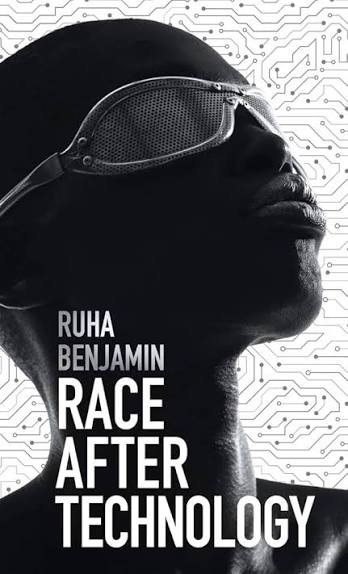
Race After Technology cover
Book · 2019
Race After Technology
Ruha Benjamin
How technologies designed by some, for some, become tools of racial inequity. Essential context for understanding why AI in Africa isn't a neutral import.
→ ruhabenjamin.com
Power and Prediction cover
Book · 2022
Power and Prediction
Agrawal, Gans & Goldfarb
The business economics of AI: why AI is about shifting who makes predictions, what that does to power, and how professionals need to adapt.
→ Find on Takealot or your library
The Alignment Problem cover
Book · 2020
The Alignment Problem
Brian Christian
What it takes to build AI that does what we want — and the many ways it goes wrong. Accessible deep dive into AI failure modes, for the curious non-engineer.
→ brianchristian.org
You Look Like a Thing and I Love You cover
Book · 2019
You Look Like a Thing and I Love You
Janelle Shane
Funny, zero-pressure intro to AI. Explains why AI can do impressive things while also doing deeply stupid, bizarre things. Helps you lose the "AI is magic" feeling fast — and laugh while doing it. Start here if you're completely new.
→ janelleshane.com
Artificial Intelligence: A Guide for Thinking Humans cover
Book · 2019
AI: A Guide for Thinking Humans
Melanie Mitchell
The best next step once you want a more serious but still readable explanation. Walks through neural networks, computer vision, language, and the gap between current AI and human intelligence — no math or coding required.
→ Find on Takealot or your library
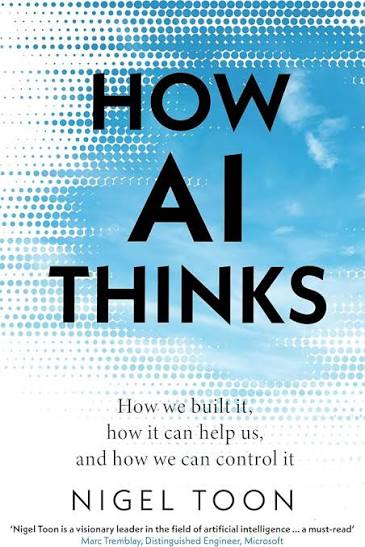
How AI Thinks cover
Book · 2024
How AI Thinks
Nigel Toon
More modern and ChatGPT-era. Explains the basic story of how machine learning developed into generative AI, what these systems are doing, and why people worry about control and power. The bridge from "I understand the basics" to "I understand the current moment."
→ Find on Takealot or your library
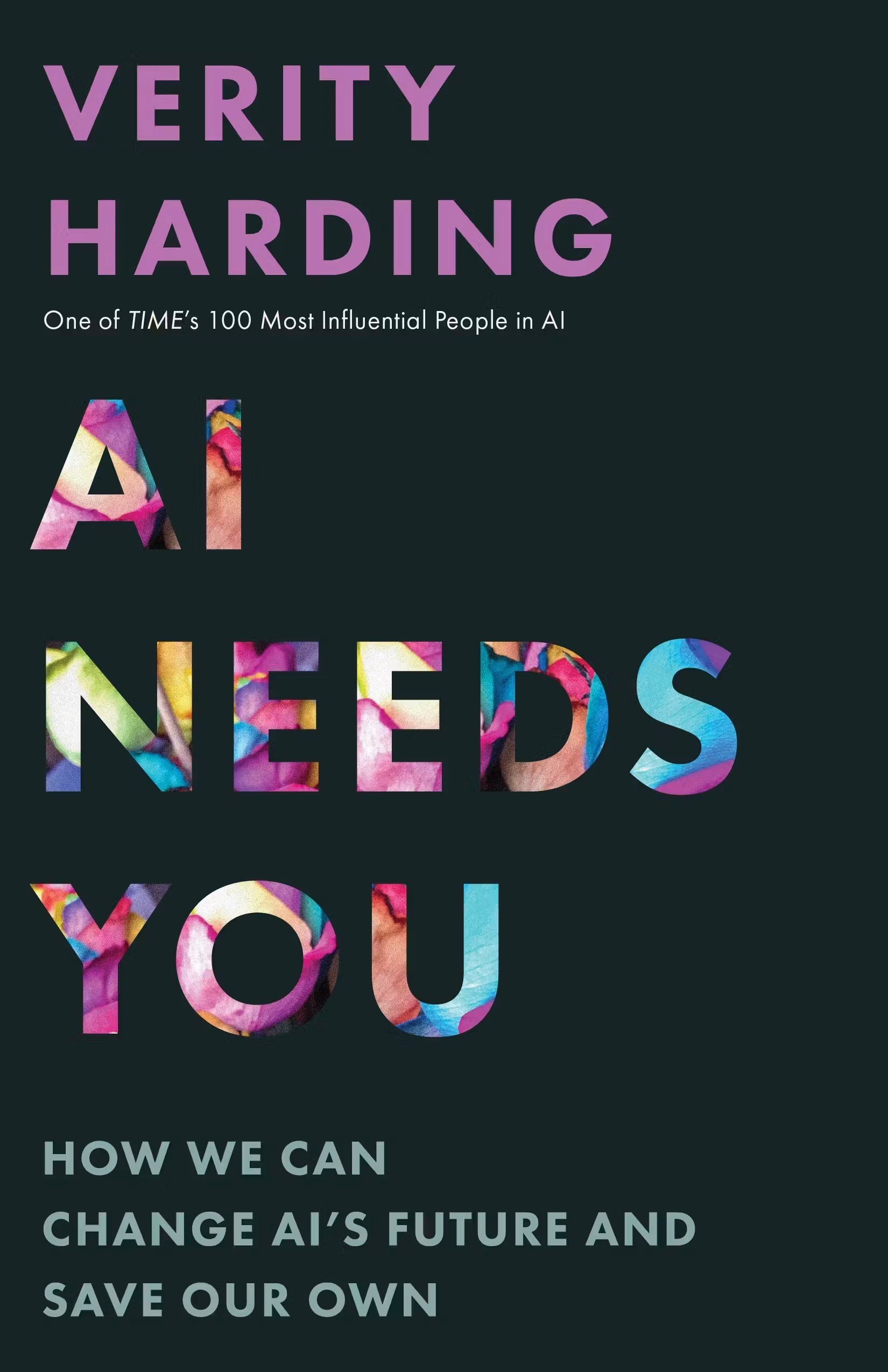
AI Needs You cover
Book · 2024
AI Needs You
Verity Harding
Less about the technical machinery and more about the human side: who gets to decide how AI is used, what rules matter, and why normal people — not only computer scientists — should be in the conversation. A good balance against reading only Silicon Valley "AI is inevitable" perspectives.
→ Find on Takealot or your library
Reports & Policy Documents
FSCA AI in Financial Sector report
Report · November 2025
AI in the South African Financial Sector
FSCA & Prudential Authority
The regulators' first comprehensive view of how AI is being adopted across South Africa's financial sector, built on a 2024 industry survey. Banks lead adoption. What your regulator already knows about AI in your sector.
→ Read the report (PDF)
ICASA State of ICT Sector report
Report · March 2026
State of the ICT Sector in South Africa
ICASA
The regulator's annual review of South Africa's telecoms, broadcasting and postal sectors: revenue, coverage, affordability and investment. Context for the networks every AI service in South Africa runs on.
→ Download PDF (ICASA)
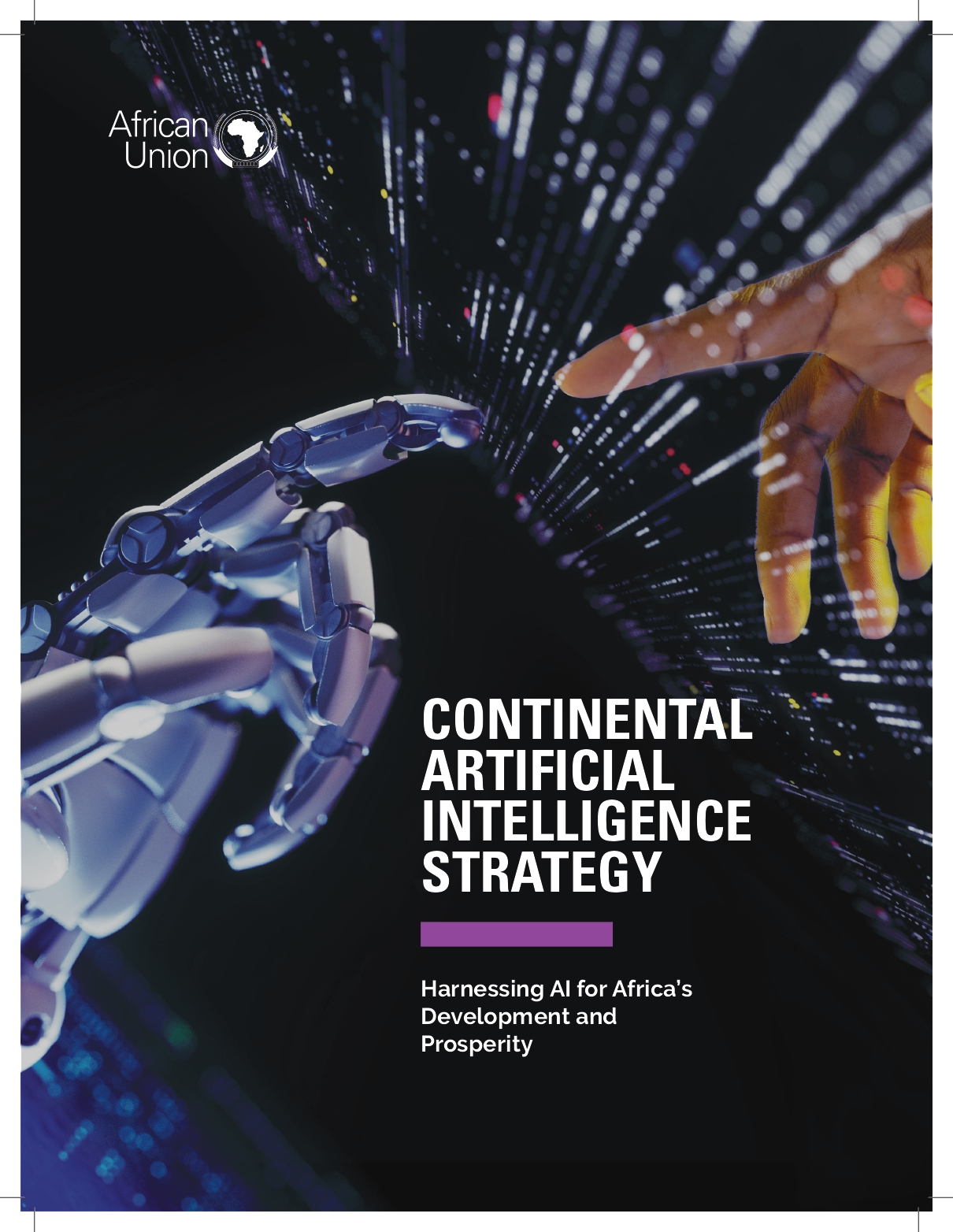
AU Continental AI Strategy document
Policy Document · July 2024
Continental AI Strategy for Africa
African Union
The continental framework for AI development in Africa, endorsed by the AU Executive Council in Accra in July 2024. Shows how national policies fit into the broader African picture and where Africa's governance priorities differ from the US or EU.
→ African Union →
UNESCO AI Ethics Recommendation
Policy Document · 2021
Recommendation on the Ethics of AI
UNESCO
The global consensus document on responsible AI — adopted by UNESCO’s 193 Member States in November 2021. The foundation for understanding what "ethical AI" actually requires in practice.
→ UNESCO.org →
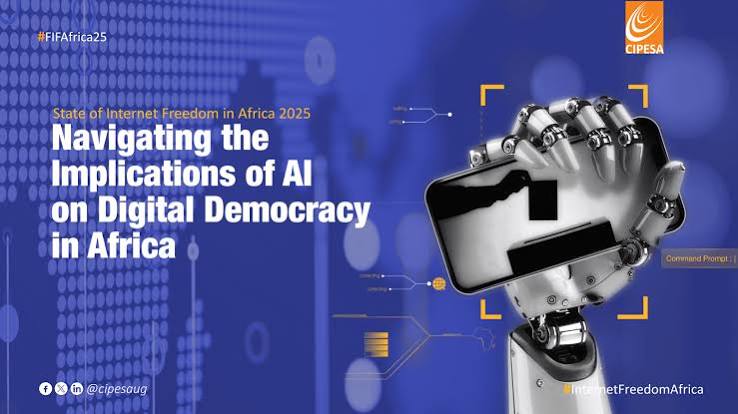
CIPESA State of Internet Freedom report
Report · 2025
State of Internet Freedom in Africa 2025
CIPESA
“Navigating the Implications of AI on Digital Democracy in Africa.” How AI is reshaping civic space and digital rights, from research in 14 countries including South Africa, Zimbabwe and Ghana: AI-powered surveillance, election deepfakes and disinformation.
→ cipesa.org →
Policy · Zimbabwe · March 2026
Zimbabwe National AI Strategy 2026–2030
Government of Zimbabwe
Formally launched by President Mnangagwa at the New Parliament House in March 2026, with the Minister of ICT, Postal and Courier Services. It frames AI as a lever for national development, economic transformation and social progress. Essential context for anyone working in Zimbabwe.
→ United Nations in Zimbabwe →


Podcasts

Worth adding to your commute. All of these are genuinely good — no filler.

Hard Fork podcast cover
Weekly · News & Culture
Hard Fork
New York Times — Kevin Roose & Casey Newton
The most accessible weekly podcast on AI and tech. Conversational, current, and honest about both the hype and the stakes. Good for staying current without getting lost in jargon.
→ nytimes.com/column/hard-fork
Eye on AI podcast cover
Weekly · Research & Industry
Eye on AI
Craig Smith
Weekly interviews with AI researchers, ethicists, and practitioners. Goes deep without losing the plot. Good for building real understanding of where AI is — not just where people say it's going.
→ eye-on.ai
Practical AI podcast cover
Weekly · Applied & Professional
Practical AI
Daniel Whitenack & Chris Benson
For professionals who want to apply AI at work, not just understand it theoretically. Business-focused, non-technical, grounded in what actually gets implemented — not just what gets announced.
→ practicalai.show
80,000 Hours Podcast cover
Long-form · AI Safety & Ethics
80,000 Hours Podcast
80,000 Hours
Long-form conversations on AI safety, governance, and the long-term consequences of AI development. Serious and evidence-based. Dense, but the episodes on AI risk and AI policy are worth the time.
→ 80000hours.org/podcast
The AI Daily Brief
Daily · Podcast + Newsletter + Website
The AI Daily Brief
Nathaniel Whittemore
Daily AI news and analysis — as a podcast, a newsletter, and a website. One of the best ways to stay current on what's actually happening in AI without drowning in noise. Subscribe to the newsletter if you can only pick one.
→ aidailybrief.ai
Data Skeptic podcast cover
Podcast · Statistics & AI
Data Skeptic
Kyle Polich
The best "I want to understand this without being treated like I already have a PhD" option. Covers statistics, machine learning, data science, and AI with a scientific-skeptical lens instead of pure hype. Good for learners who want the rigour without the jargon.
→ dataskeptic.com
The Cognitive Revolution podcast cover
Podcast · AI Strategy & Safety
The Cognitive Revolution
Nathan Labenz
Good for understanding what AI systems can realistically do, where companies are actually using them, and what the big arguments are around agents, reasoning, work, and safety. More conversational than instructional — closer to a front-row seat at the serious AI conversation.
→ cognitiverevolution.ai

YouTube Channels

Seven channels worth your time. Start with one video from each and go from there.

3Blue1Brown channel icon
YouTube · Visual Explainers
3Blue1Brown
Grant Sanderson
The best visual explanation of how AI and machine learning actually work. His "Neural Networks" series is the clearest explanation of what's inside the black box — no coding required, just curiosity. Start here.
→ youtube.com/@3blue1brown
Two Minute Papers channel icon
YouTube · AI Research
Two Minute Papers
Károly Zsolnai-Féhér
Short, excited summaries of the latest AI research papers. Two minutes to understand what just changed in the field. Good for staying current on AI capabilities without reading academic papers yourself.
→ youtube.com/@TwoMinutePapers
Fireship channel icon
YouTube · Fast Takes
Fireship
Jeff Delaney
Fast, entertaining explainers on AI tools and tech — usually 100 seconds to 10 minutes. If something is happening in AI right now, Fireship has probably made a video about it. Great for keeping up without going deep.
→ youtube.com/@Fireship
Andrej Karpathy channel icon
YouTube · Deep Technical
Andrej Karpathy
Former Tesla AI Director & OpenAI researcher
The most respected technical educator in AI. His "Let's build GPT from scratch" video is the clearest explanation of how large language models work. Rewards patience — this is the one to watch when you want to truly understand what's inside the tools you use every day.
→ youtube.com/@AndrejKarpathy
Yannic Kilcher channel icon
YouTube · AI Research Papers
Yannic Kilcher
Yannic Kilcher
Deep walkthrough of landmark AI research papers — including the original Attention Is All You Need paper and GPT-series models. More technical than Two Minute Papers but far more thorough. Good for learners who want to understand the actual science.
→ youtube.com/@YannicKilcher
StatQuest with Josh Starmer channel icon
YouTube · Statistics & ML Foundations
StatQuest with Josh Starmer
Josh Starmer
The best resource for the pieces underneath AI: probability, statistics, loss functions, gradient descent, neural nets, decision trees, transformers. His videos are slow, clear, and genuinely patient. Good for learners who want to understand what's actually happening when AI learns.
→ youtube.com/@statquest
DeepLearning.AI channel icon
YouTube · Structured AI Education
DeepLearning.AI
Andrew Ng
More course-like than entertainment. The most structured serious AI education available free on YouTube. Good once you want to move from understanding concepts to learning how machine learning and modern generative AI systems are actually built and used.
→ youtube.com/@deeplearningai

Course Case Studies

The real-world cases behind the modules, each written to match what its source says, with a link to that source. Use these to revisit a case after a session or share with a colleague.

Module 1 Government · South Africa · April 2026
SA Government AI Policy Hallucination Scandal
On 10 April 2026 South Africa’s Department of Communications and Digital Technologies published its draft National AI Policy for public comment. Journalists checked the references and found fabricated ones; the process halted 16 days later when the Minister withdrew the draft, calling it a failure of oversight: generative AI had been used without proper human verification of the sources.
Read: The Conversation →
Module 2 Finance · SA / Nigeria / Kenya · 2025
Credit Scoring: The 37% Gender Penalty
A 2025 audit of 10 credit-scoring algorithms across South Africa, Nigeria, and Kenya found that women-led SMEs received lower funding recommendations, with the study reporting a 37% underfunding penalty — linked to gender signals in ownership, sector coding and networking patterns. No individual loan officer decided to discriminate. The algorithm did it invisibly. Source note: the study used synthetic audit profiles to test algorithmic outputs, not real lending decisions from named lenders. Findings reflect potential algorithmic bias, not a universal estimate for all African fintech lenders. (Dzreke & Dzreke, 2025)
Read: Advanced Research Journal →
Module 2 Finance · Kenya · CGAP, 2016
Kenya Mobile Lending: When Access Becomes the Score
Most Kenyan digital lenders set a credit score and loan size from the borrower’s phone-based data — call and SMS records, mobile money history and social media data — and many operate outside regulation, CGAP reported. Our analysis for the course: a model fed this kind of data can read a thin digital footprint, often a matter of cost or access, as risk, without the person being any less creditworthy.
Read: CGAP →
Module 3 Law Enforcement · South Africa
Predictive Policing: Who Gets Flagged?
A 2024 review of algorithmic bias in Africa reports that predictive policing algorithms in South Africa have been found to target low-income communities, increasing surveillance and harassment of innocent people (citing Singh, 2022). Module 3 explores the mechanism through a labelled composite scenario: when patrols follow past records, the places already policed most produce the most new data.
Read: PMC / Frontiers →
Module 3 Biometrics · Multi-country · 2018
Facial Recognition: Accuracy Is Not Equal
The Gender Shades study tested three commercial gender-classification systems on 1,270 faces of people from Rwanda, Senegal, South Africa, Iceland, Finland and Sweden. Darker-skinned women were the most misclassified group, with error rates of up to 34.7%; the highest error rate for lighter-skinned men was 0.8%. A system like this has to be tested on the people it will actually be used on.
Read: Gender Shades (Buolamwini & Gebru) →
Module 4 Media & Elections · South Africa · May 2024
SA 2024 Election Deepfake Videos
During South Africa’s 2024 elections, deepfake videos were circulated to manipulate perceptions and endorse political entities, CIPESA reports. Post-election research found conventional misinformation was still more widespread than synthetic media — but one convincing fake can spread before anyone checks its source. South Africa has no single “deepfake law”: consequences depend on what the content does and which law applies.
Read: CIPESA State of Internet Freedom in Africa →
Module 5 HR & Legal · South Africa · September 2025
AI Recruitment and the Employment Equity Act
In a September 2025 alert, SA law firm Cliffe Dekker Hofmeyr noted that the Employment Equity Act prohibits unfair discrimination in employment, and that if an AI tool used in recruitment results in discriminatory outcomes, “employers may be held liable.” Their advice: build human review into key stages, especially where AI flags or rejects candidates, and set clear policies on AI use. Not legal advice — take specific questions to a qualified employment lawyer.
Read: Cliffe Dekker Hofmeyr Employment Law Alert →
Module 6 Healthcare · Global, incl. southern Africa · 2021–2025
AI-Assisted TB Screening: A Score, Not a Diagnosis
WHO has recommended computer-aided detection (CAD) software for reading chest X-rays in TB screening since 2021, and in June 2025 reported six products meeting its performance standards for people aged 15 and older. It does not yet recommend CAD for children under 15, and anyone who screens positive still needs confirmatory testing before treatment. Module 6 uses CAD4TB to show AI supporting, not replacing, clinical judgment.
Read: World Health Organization →
Module 6 Education · South Africa · CSIR
Dr Math: Technology That Kept the Human at the Centre
The CSIR Meraka Institute’s Dr Math let learners send maths questions over MXit, a popular chat service, to registered human tutors — mostly University of Pretoria students — with a system routing each request to an available tutor. The emphasis was on imparting skills rather than supplying answers. It won a Technology in Government in Africa award in 2011. Module 6 contrasts it with AI that scores: here the human was the service.
Read: CSIR →
Supplemental: African AI Success Stories
Supplemental Finance · Africa · Platform for banks and mobile operators
Jumo: AI Behind Mass-Market Credit
Jumo provides a mobile financial technology platform that mobile network operators, payments providers and banks use to offer credit and other financial products at scale. It describes its “leading AI prediction capabilities” as central, says the platform has been behind 250M+ loans, and that its team works across 15 countries on 3 continents.
Visit: jumo.world →
Supplemental Education · South Africa
Siyavula: Adaptive Practice, Free to Learners
Siyavula offers curriculum-aligned Mathematics (Grades 8–12) and Physical Sciences (Grades 10–12) practice with full solutions and instant feedback, free for learners and data-free on the MTN and Cell C networks in South Africa. Its practice questions are “guided by the algorithm” and adapt to each learner, so each one progresses at their own pace.
Visit: siyavula.com →